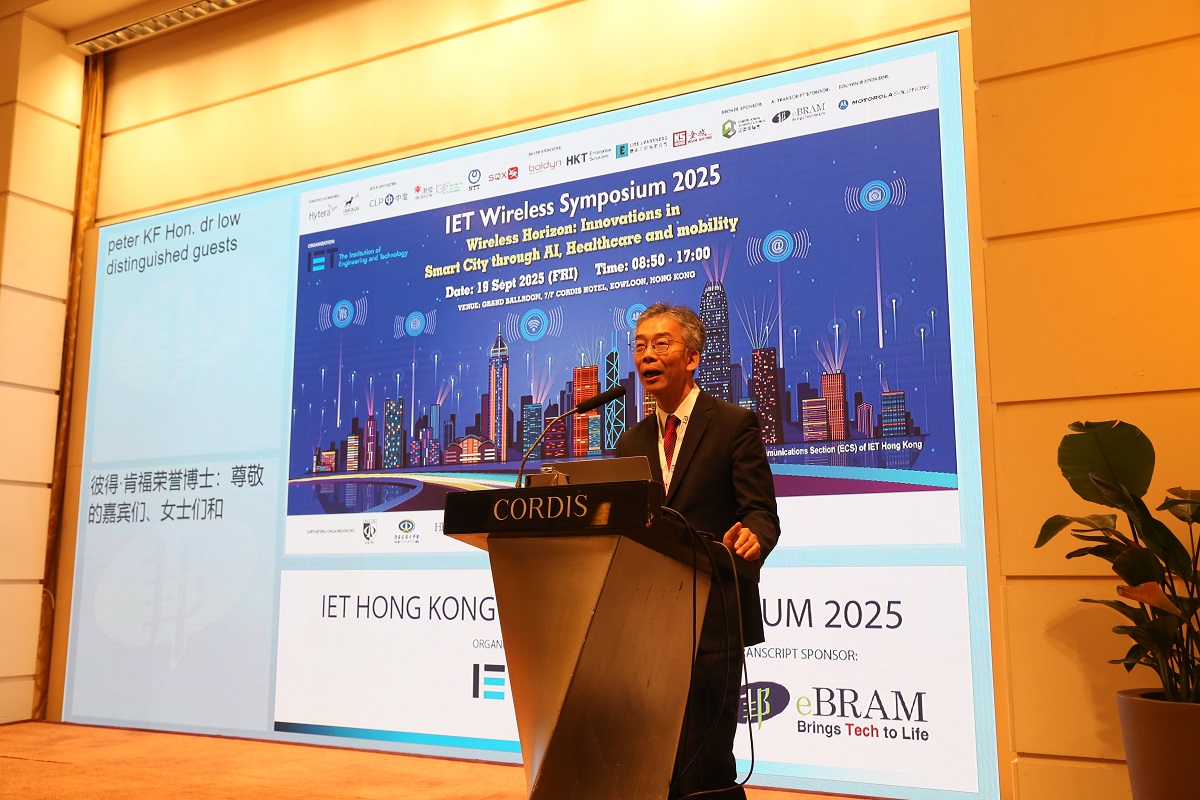
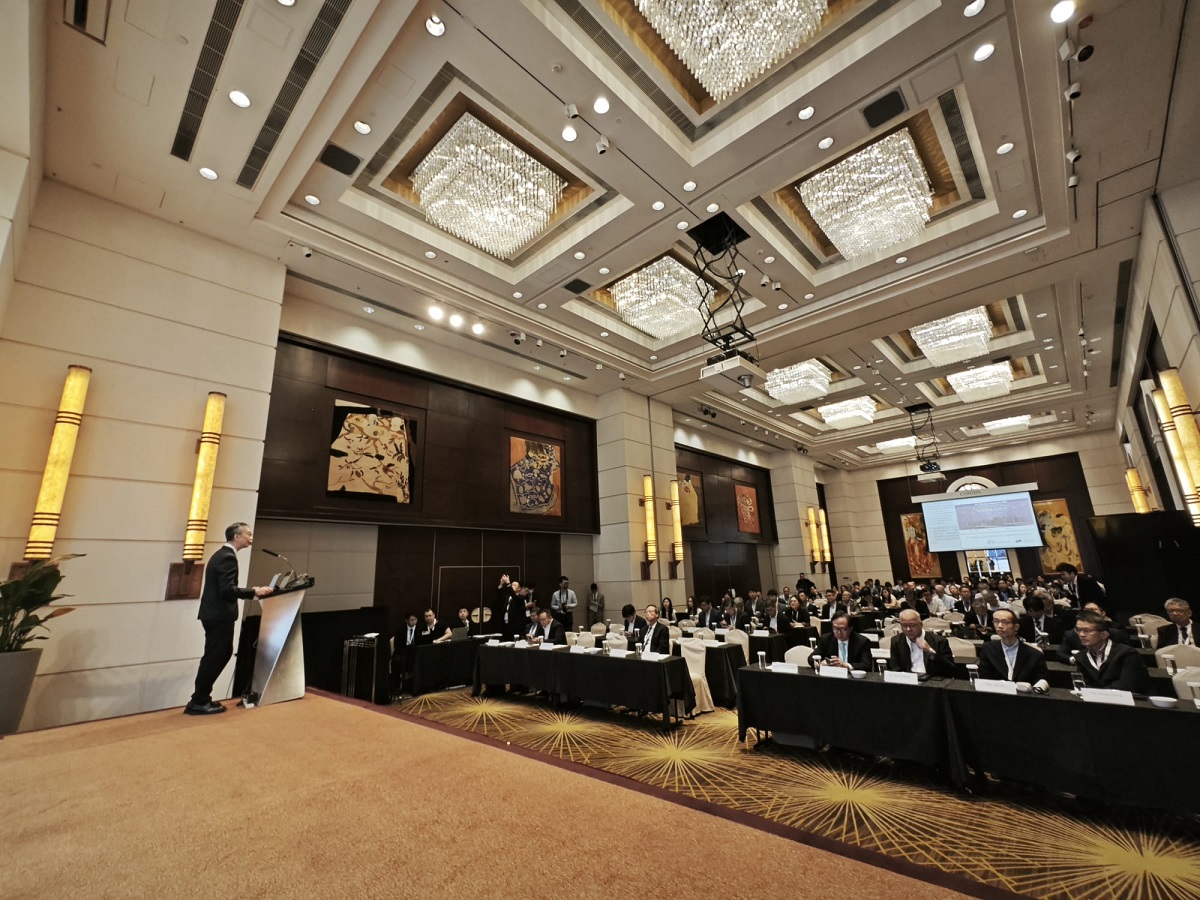
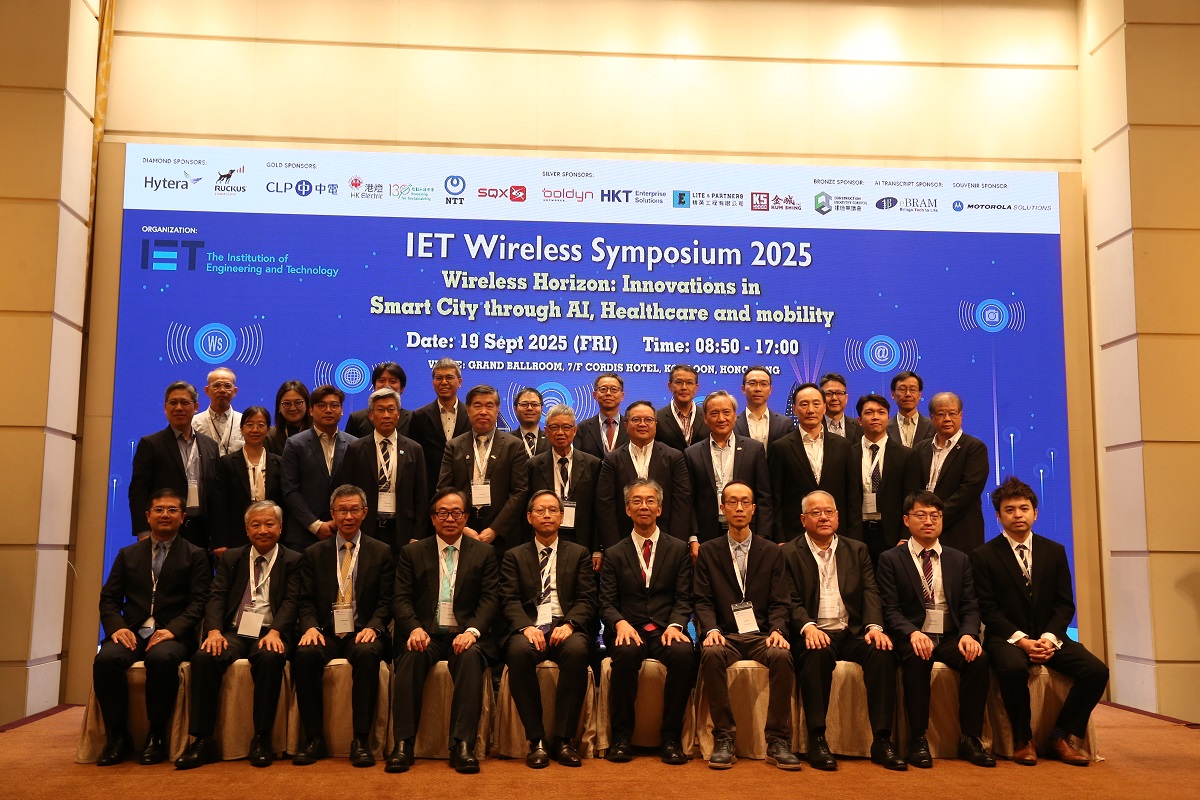
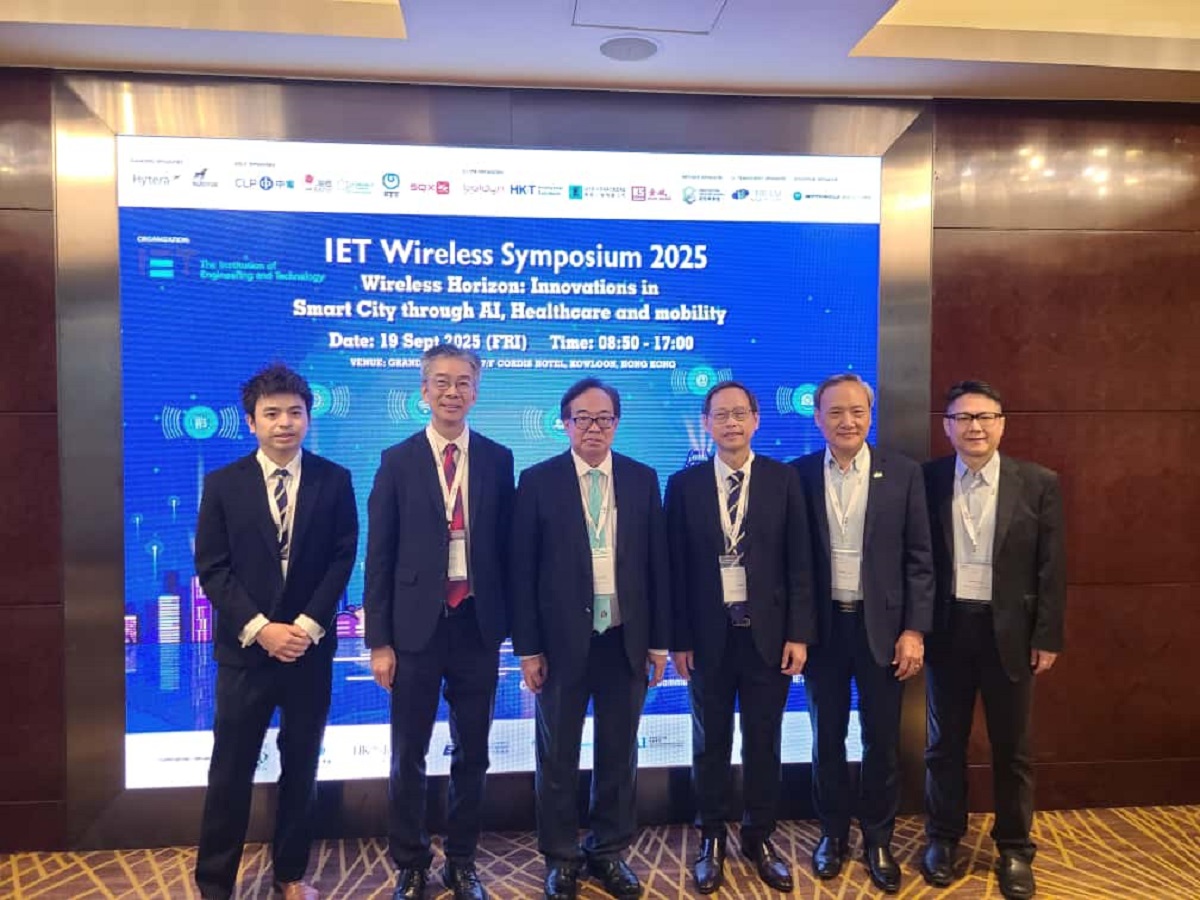
Keynote Opening by Mr Donald Mak, BBS, Deputy Commissioner (Data Governance), at the “IET Wireless Symposium 2025” (with photos)
Peter (Mr Peter LEUNG, Chairman, IETHK), KF (Prof K.F. TSANG, General Chairman, IET Wireless Symposium 2025), Dr Honourable LO (Ir Dr Hon LO Wai-kwok, Legislative Council Member), distinguished speakers and guests, ladies and gentlemen,
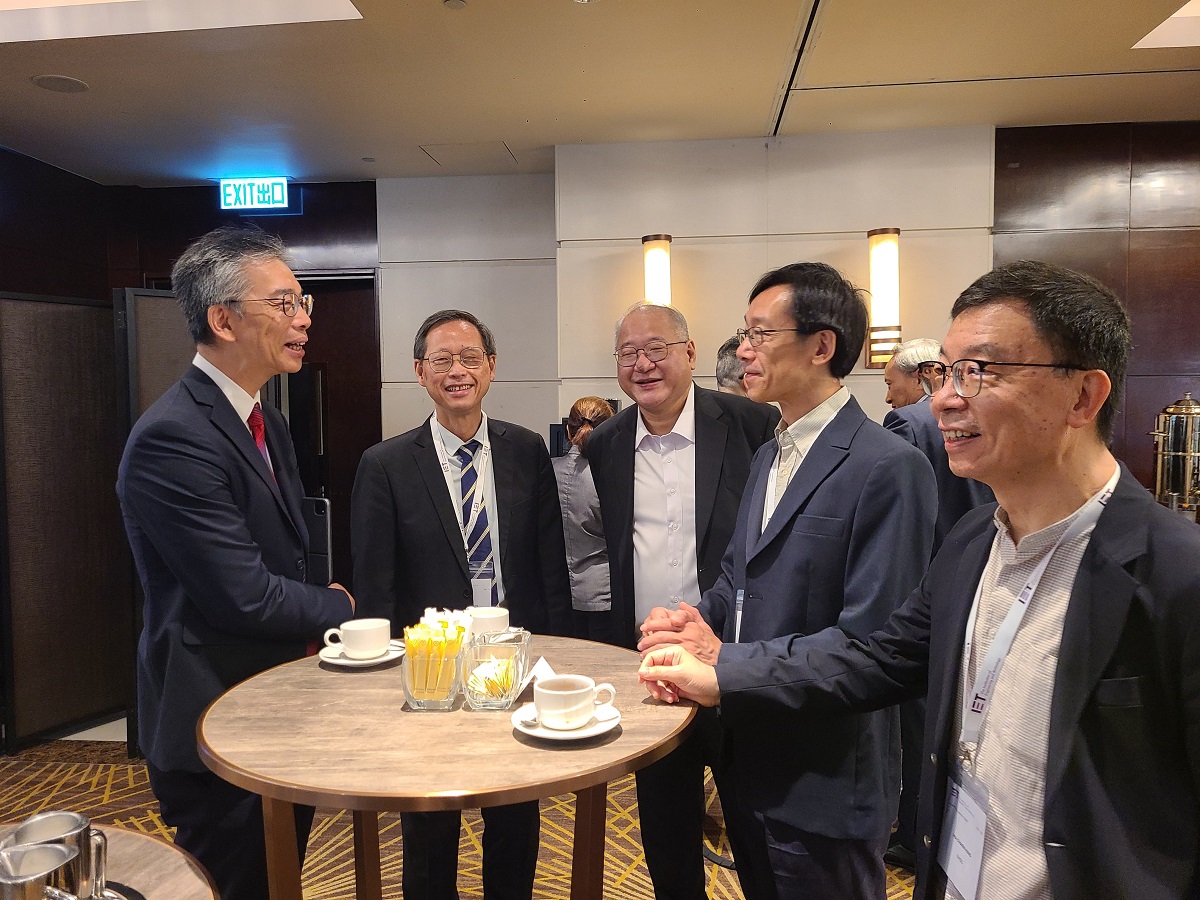
Good morning. It is my great pleasure to join you all at today’s “IET Wireless Symposium 2025”. I would like to thank the IET Hong Kong for bringing together industry leaders and experts to share their visions and exchange ideas on cutting-edge technologies and innovations that are driving every facet of development in Hong Kong.
We are entering a new era defined by technological advancement and application. Unmanned Aerial Vehicles (UAVs) are reforming transportation and logistics, while Artificial Intelligence of Things (AIoT) leverages smart sensors to optimise systems like energy grids and predict maintenance needs. Smart transportation solutions enhance traffic flow and safety through real-time monitoring and data-driven adaptive control with the use of machine learning models. In healthcare, innovation is exemplified by AI-assisted clinical diagnosis for rapid identification of critical conditions, smart wards that enable real-time vital signs monitoring, as well as robotic assistants that improve both operational efficiency and patient care.
Building on these advancements, the Government has been actively promoting the adoption of innovation and technology to build a smarter Hong Kong. To help develop the low-altitude economy, we have recently amended the Small Unmanned Aircraft Order, and launched a Regulatory Sandbox to enable interested parties to conduct pilot projects on innovative application of drones in different areas, such as logistics, urban management, building inspection, etc. Furthermore, the Transport Department is facilitating trials of autonomous vehicles and deploying smart traffic solutions to enhance road safety and optimise the use of limited road space. In addition, the Health Bureau has launched a five-year development plan of eHealth+ to transform the Electronic Health Record Sharing System into a comprehensive healthcare information infrastructure. This upgraded platform will integrate data sharing, service delivery and care journey management. Together, these cross-sectoral efforts underscore the Government’s strong commitment to fostering innovation and building a future-ready Hong Kong.
While these innovations showcase remarkable technological advancement, they all rely on a common driving force – AI. In fact, AI is becoming the essential catalyst for smart transformation across the society.
Along the strategic directions set out in the “Hong Kong Innovation and Technology Development Blueprint”, the Government has been adopting an all-round strategy to develop a robust AI ecosystem in Hong Kong, covering data policies and resources, data and computing power infrastructure, research and development (R&D), AI governance, AI talent development, AI industry development and promotion of AI adoption.
Let me highlight some of our key initiatives to advance the AI development in Hong Kong.
On computing power infrastructure, Cyberport has established the Artificial Intelligence Supercomputing Centre (AISC) to support the strong local demand for computing power. Its computing power will gradually ramp up to 3 000 petaFLOPS within this year, which will be among the largest in the region.
In parallel, we launched a HK$3 billion Artificial Intelligence Subsidy Scheme last October to empower local institutions, R&D centres and enterprises to leverage the AISC’s computing resources for their R&D projects to achieve scientific and application breakthroughs.
On the R&D front, through the AIR@InnoHK, an innovation and research platform, the Hong Kong Generative AI Research and Development Center (HKGAI) was set up in 2023, focusing on the R&D of local generative AI foundation models and related applications. In February this year, HKGAI launched Hong Kong’s first large language model (LLM), “HKGAI V1”, with optimisation for Hong Kong’s cultural and linguistic environment. Leveraging this LLM, HKGAI has developed a series of generative AI document processing tools, which are currently under pilot use by over 24 000 civil servants, assisting with tasks such as document drafting, translation, summarisation, meeting minute-taking and AI-powered information retrieval. In parallel, HKGAI is optimising its LLM and aims to launch to the market a chatbot, namely the “HKChat” mobile app, for public use later this year, so as to help promote the use of AI in the community.
To further promote the R&D and application of AI in Hong Kong, we have also set aside HK$1 billion for the establishment of the Hong Kong Artificial Intelligence Research and Development Institute. The institute will spearhead and support Hong Kong’s innovative R&D and industry applications of AI, facilitating upstream R&D, midstream and downstream transformation of R&D outcomes and expanding application scenarios. The institute is expected to come into operation in 2026, subject to relevant funding approval.
On the application of AI, the Government is leading by example to explore the use of AI in different areas. Apart from the pilot use of generative AI document processing tools that I mentioned earlier, government departments have been proactively exploring and developing applications using AI and robotics technologies in diverse areas of government operations. The most visible examples are AI-powered robots, which perform a wide range of tasks under different conditions, including rescue operations, construction site monitoring, remote sea area surveillance, toxic gas detection, building wall inspections, underground drainage checks, etc.
To further promote and accelerate the adoption of AI-related innovative solutions in government departments, we launched the “AI+ Civil Services” Campaign in June this year, introducing the AI+ Tool and Solution Catalogue to empower government departments to adopt cutting-edge solutions. Through thematic technology forums, seminars and matching workshops, we are actively connecting public officers with technology providers, with a view to developing innovative AI applications for delivering smarter and more effective public services for the community.
We are well aware that AI governance is essential for the safe adoption of AI. We need to strike a balance between encouraging innovative applications of AI and mitigating the risks associated with AI adoption. In this regard, the Digital Policy Office (DPO) formulated the “Ethical Artificial Intelligence Framework” in 2021 and updated it in July 2023 to assist organisations in adopting AI technology in a structured approach, ensuring that ethical considerations are properly integrated into their IT projects or services. In April this year, the DPO also promulgated the “Hong Kong Generative Artificial Intelligence Technical and Application Guideline” to set out the appropriate codes and guidelines on the application development and use of generative AI technology.
We are grateful that our efforts in propelling innovation and technology development have begun to bear fruit. According to the Global Innovation Index 2025 released by the World Intellectual Property Organisation (WIPO) early this month, the Shenzhen-Hong Kong-Guangzhou cluster was ranked the first globally among all innovative clusters around the world.
Nonetheless, there is no room for complacency. Earlier this week, the Chief Executive had announced in his 2025 Policy Address a series of new initiatives to further accelerate the application of AI within the Government with a view to elevating the effectiveness and efficiency of public services.
Among others, the Government will set up the AI Efficacy Enhancement Team to coordinate and steer government departments in applying AI technology to their work effectively, exploring process re-engineering opportunities, and promoting technological reform in departments to improve efficacy. Led by the Deputy Chief Secretary for Administration, the team will also examine with government departments their needs for reform, with priority given to departments with greater interface with the public.
Moreover, the Digital Policy Office will roll out various AI applications in respect of data analytics, customer service and document processing, to promote extensive application in departments, while ensuring security and controllability.
Furthermore, an “AI Assistant” will also be developed and integrated into “iAM Smart” and “Digital Corporate Identity” to provide users with instant responses to enquiries, personalised services, and tailored recommendations for suitable funding schemes and public service support for enterprises (especially SMEs).
Looking ahead, the Government will continue to champion AI and frontier technologies, and leverage the transformative potential of AI to build a smarter and better Hong Kong. Let’s work together to harness the power of technology to support the sustainable growth of the digital economy and fortify our city’s resilience. In closing, I wish this Symposium resounding success, and I hope you all enjoy the fruitful exchange today. Thank you.
- ENDS -