Welcoming Speech by Mr Donald Mak, BBS, Acting Commissioner for Digital Policy, at the “Robotics Conference 2025” (with photos)
Prof. YUEN (Prof. Peter YUEN, Dean of College of Professional and Continuing Education), distinguished speakers and guests, ladies and gentlemen,
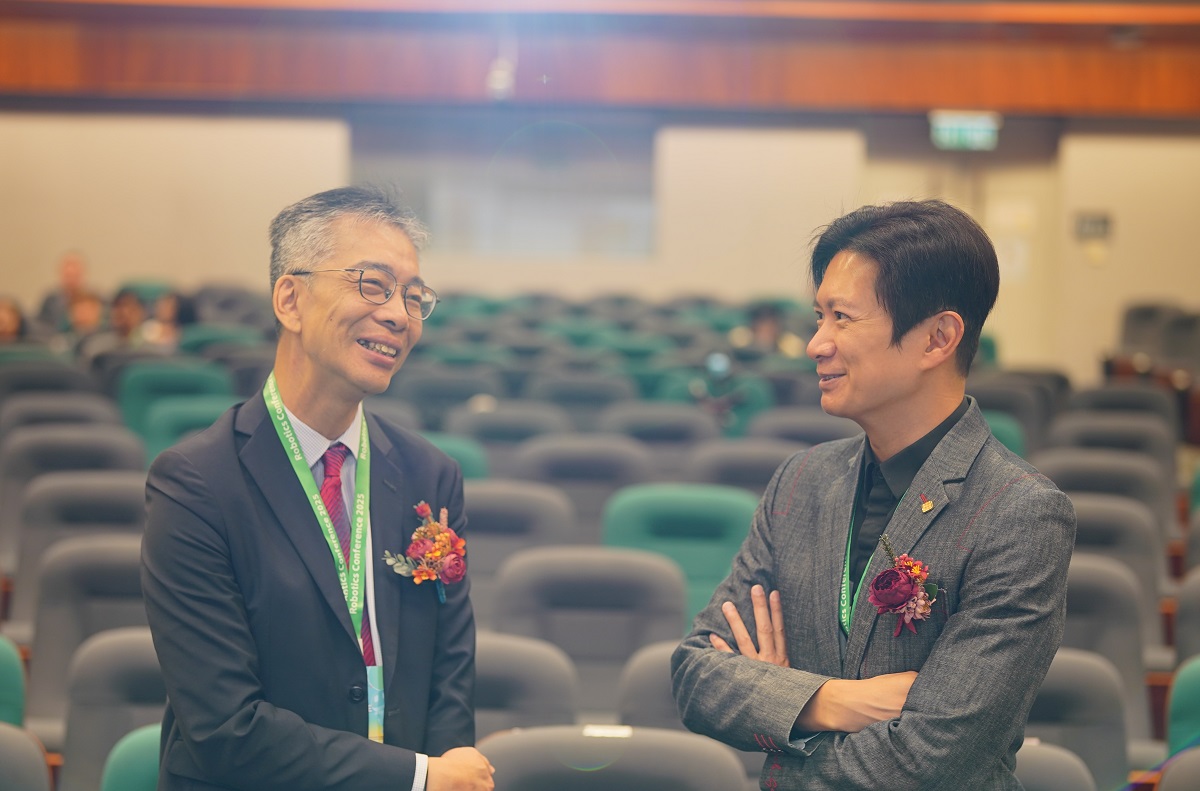
Good morning. It is my great pleasure to join you all at today’s “Robotics Conference 2025”. This conference provides an excellent platform for robotics experts from around the world to exchange insights on robotics development and explore future applications, opportunities and challenges for the industry.
Robotics is fundamentally redefining human potential. Today, we witness humanoid robots collaborating seamlessly in dynamic environments, AI-driven swarm robotics autonomously coordinating disaster rescue missions across unstable terrain, and biohybrid robots integrating living tissues for medical treatment. In industry, adaptive robotic systems leverage real-time machine learning to optimise supply chains, while in healthcare, nanorobots enable targeted drug delivery at the cellular level. These breakthroughs demonstrate that robotics is no longer confined to repetitive tasks, it is evolving into an intelligent, empathetic, and transformative force in the society.
While robots captivate global attention, artificial intelligence (AI) is becoming the core catalyst in transforming them from automated machines into intelligent systems. AI empowers robots to perceive, learn, adapt, and make decisions, propelling them far beyond simple automation. On this front, the Government has introduced a series of strategic initiatives to support and drive the AI development in Hong Kong.
Along the strategic directions set out in the Hong Kong I&T Development Blueprint, we have launched targeted measures to foster research and development (R&D) growth in frontier technologies. Among these is the AIR@InnoHK Research Cluster. The cluster brings together global top talents to foster innovative research, promote technology transfer and the application of AI and robotics technologies. One of its key research centres is the Hong Kong Generative AI Research and Development Center (HKGAI) which aims to establish Hong Kong’s own AI foundational models and ecosystem. Having recently launched its homegrown AI large language model (LLM) “HKGAI V1” based on DeepSeek technology with optimisation for Hong Kong’s cultural and linguistic environment, the HKGAI is now at full steam optimising its LLM and aims to launch to the market a chatbot "HKChat" developed on the basis of its LLM for public use this year.
Hong Kong provides a good breeding ground for AI and robotics technologies to flourish. As home to five of the world’s top 100 universities, we possess world-class R&D capabilities and a diverse talent pool. In terms of digital infrastructure for supporting AI research and development, our local technology flagship Cyberport has commenced the operation of the AI Supercomputing Centre (AISC) since last December. Its computing power will gradually ramp up to 3 000 petaFLOPS within this year, which will be among the largest in the region. At the same time, we also launched a $3 billion AI Subsidy Scheme last year to encourage the industry to leverage the AISC’s computing resources. Starting from last October, eligible users including local institutions, R&D centres and enterprises can apply for subsidy under the scheme to use AISC’s computing power for their R&D projects to achieve scientific and application breakthroughs.
To further boost the AI development, we have also set aside $1 billion for the establishment of the Hong Kong AI R&D Institute. The new institute will spearhead and support Hong Kong’s innovative R&D and industry applications of AI, facilitate upstream R&D, midstream and downstream transformation of R&D outcomes, and expanding application scenarios.
To complement these efforts and facilitate the wider adoption of robotics and AI as well as other innovative technologies in the Government, we established the Smart Government Innovation Lab (Smart Lab) to assist government departments identify suitable I&T products and solutions that enhance the effectiveness and efficiency of public services. Since its establishment, the Smart Lab has successfully matched over 140 business needs with solutions on emerging technologies including AI-powered robots for performing a wide range of tasks under different conditions, for example, rescue operations, toxic gas detection, and building wall inspections, etc. I strongly encourage technology enterprises to connect with the Smart Lab to showcase your solutions and unlock new business opportunities.
Moving forward, the Government will continue to foster the AI ecosystem. With our robust infrastructure, industry empowerment measures, and most importantly your support, we will harness this transformative potential to build a smarter and better Hong Kong together.
In closing, I wish this conference resounding success. To our international guests, I wish you all having an inspiring and pleasant stay in Hong Kong. Thank you.
- ENDS -